FF
We have been intrigued by a male Great Bowerbird Chlamydera nuchalis and his antics for about eight weeks. The first time we accidentally stumbled across his bower, but since have made an effort to visit him fairly regularly. We have noticed the last two weeks he has certainly tidied up his bower and the assortment of dried snail shells, green seed beries, quartz pebbles and broken glass have been neatly reorganised. After catching a glimpse of his nuchal crest , we went back specifically to photograph him in all his splendour. When we arrived there were three Great Bowerbirds in the neighbourhood and all of the action was restricted to singing from low tree branches. The sounds included mimicking the sound of bark being grated from a tree branch, because at first I thought he was sliding up and down the branches, but as I watched him he was just about motionless as he sang his version. He song also included hissing, and high pitched soprano clicking all of which were being echoed by the two other Great Bowerbirds. After an hour of song he came to his bower and I was able to get a few amazing pictures.
FF
Dr Richard Noske wrote that while most male birds show off their voices or flamboyant plumage to impress a potential mate, bowerbird males had instead perfected the “come up and see my etchings” art of seduction.
FF
 FF
FFAccording to Dr Noske, “Once the
bower is completed, he sings very loudly to
advertise his creative masterpiece to any passing females, to whom he then shows off by
strutting while circling the bower...
FF FF
FF
... and to
top off the show,
he lowers his beak while twisting his head sideways to
flaunt his
usually-hidden but now
fully erected mauve crest,”
FF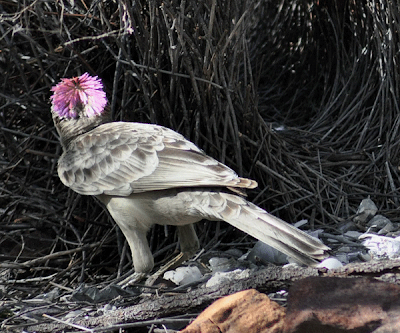 FF
FF
In conclusion Dr Noske nots that, “The owners of the
best bowers are the winners and male bowerbirds have been known to steal ornaments from their rival’s bowers and sometimes even completely destroy them to increase their chances of scoring a mate.”
FF FF
FF
Dr Richard Noske teaches at Charles Darwin University and research interests include the birds of the Northern Territory.
(
http://www.cdu.edu.au/research/profiles/profile_noske.html)
FF


 FF
FF


