Saturday, December 12, 2009

Mangrove Walk Fogg Dam

F
Walking in mangroves can be very restrictive because they are impenetrable. Not only do you come across shear walls of growth but birds are difficult to follow if you spook them. So often it is the avenues between plant species that provide a reasonable path such as the avenue between mangroves and paperbarks, or small run-off erosion avenues which wash away the soil and allow for tidal runoff back to the river itself that enable contortion like visits to take place. So its very nice to occasionally stroll down a manmade flat path or even an elevated one cut through the mangroves like at Fogg dam.
FF
Golden Orb Weaver Nephila ornate
FF

FF
Sugarbag Bee Trigona carbonaria on
Bandicoot Berry Leea indica
FF


FF
Yellow White-eye Zosterops lutea
on White-flowered Black Mangrove Lumnitzera racemosa Willd
FF

FF
Pheasant Coucal Centropus phasianinus
FF
FF
Red-headed Honeyeater Myzomela erythrocephala female
on River Mangrove Aegiceras corniculatum
FF
FF
Red-headed Honeyeater Myzomela erythrocephala male
on Grey Mangrove Avicennia marina var eucalytifolia
FF
FF

Monday, December 7, 2009

Pre Wet Excitement

FF
Walking around the open forest adjacent to a mangrove lined river, I have the impression that with the regular small amounts of rain, there is a lot of anticipation that more rain is on its way.
FF
I have seen many nesting pairs of Northern Fantails, but all of the nests have been wrecked soon after the young start raising their heads above the nests. I wonder if this Goshawk is responsible?
FF
Brown Goshawk Accipiter fasciatus
FF
FF
A lone dove has been calling day after day, but as yet his calls have been unanswered.
FF
Rose-crowned Fruit Dove Ptilinopus regina
FF
FF
A pair of Cuckoos have been flying erratically from tree to tree. They don’t seem to be feeding and they don’t nest here so I wonder what is driving them?
FF
Oriental Cuckoo Cuculus optatus
FF
FF
You never hear them until they stop and then when they start again you cannot believe how loud they are.
FF
Cicada Unidentified Cyclochila
FF
FF
There are untold numbers of sticky flies that love the moisture in the corner of your eyes. There are March flies which can leave a bloody mark on your leg. So it is nice when you come across another type of insect which leaves you alone and looks so interesting.
FF
Native Drone Fly Eristalinus punctulatus
FF
FF
Three remarkable plants are in blossom.
FF
Leichhardt Tree Nauclea orientalis
FF
FF
Wild-Orange Capparis mitchellii
FF
FF
Wrightia-saligna
FF
FF
Its amazing how the birds use different parts of the open forest. Some birds specifically hunt on the floor.
FF
Emerald Ground Dove Chalcophaps indica
FF
FF
Some hunt in the shrubs and are happy eating the unripe fruit of a native cherry tree.
FF
Mistletoe Bird Dicaeum hirundinaceum
FF
FF

Friday, November 27, 2009

What Am I Missing

FF
November-Litchfield seemed very subdued, almost as if everything was on hold until the rains come. Plenty of marsupials (more Wallaroos than Wallabies) moving to and from water in the morning, but very little bird activity.
FF
Short-eared Rock Wallaby Petrogale brachyotis
FF

FF
There were a lot of big grasshoppers; some appeared as small birds (wishful thinking perhaps) when they first took flight. Maybe it was because the early morning was burnt off so fast. By nine a.m. I was soaked and swimming through the atmosphere. Morning at this time of year seems to be between five thirty a.m. and eight a.m. sharp.
FF
Unidentified Caelifera
FF

FF
Maybe its because there is permanent water all-year-round. Maybe its because it is distributed over a wide area so that the mosaic of birding territories are spread out. I am so used to constricted landscapes where artificially small territories are the name of the game.
FF
St. Andrew’s Cross Spider family Araneidae
FF
FF
There were puddles of rain laying on the tracks so there has been some rain. Some plants growing a distance from the permanent creeks are flowering. I didn’t see any nectar eaters humming around or any insect eaters taking advantage of eating some of the invited guests to this special occasion.
FF
Bladderwort Utricularia fulva
FF
FF
Crabs Eye Vine Abrus precatorius
FF
FF
Cycad Cycas calcicola
FF
FF
Ixora klanderana
FF
FF
Bandicoot Berry Leea indica
FF
At Lost City, far away from permanent water streams I managed to see a couple of Grey Shrike-thrushes first on the rocky outcrops then in the tree tops. They were very wary and it was difficult to get near them. The only other bird experience was occasionally hearing a bowerbird rasping in the distance.
FF
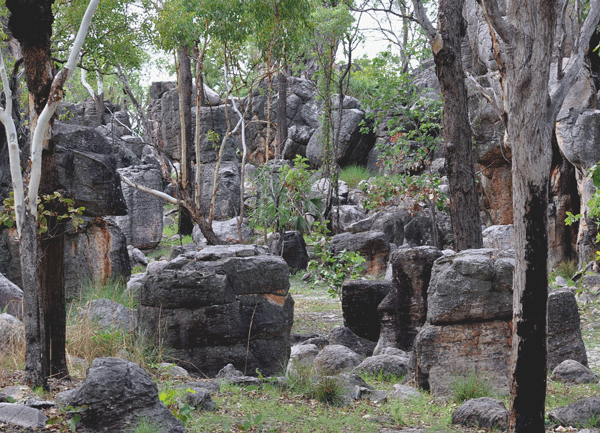
Lost City
FF
FF
Grey Shrike-thrush Colluricincla harmonica
FF
FF
Interesting place at this time of year-more for what was not there than what was-I keep wondering what I am missing!
FF

Monday, November 16, 2009

A Weekend Of Nature

FF
It seems the NT environs are outstanding for the shear range of occupants and chances to see them up close and personal. Fogg Dam was alive with the sound of Rainbow Pitta and Yellow Oriole in the vine forest adjacent to the wetlands.
FF
Fogg Dam Vine Forest Floor
FF

FF
Yellow oriole Oriolus flavocinctus
FF

FF
Yellow oriole Oriolus flavocinctus
FF
FF
Rainbow pitta Pitta iris
FF
FF
We seemed to be the first walkers in the area as we had to push our way through countless spider webs laid across the path. Early morning stalkers were already on the move.
FF
St. Andrew’s Cross Spider family Araneidae
FF
FF
Pheasant Coucal Centropus phasianinus
FF
FF
Little Bronze-Cuckoo Chrysococcyx lucidus
FF
FF
We saw several plants starting to flower and add their scents to the exotic mix.
FF
Clerodendrum floribundum
FF
FF
At the Fogg Dam wetlands the Lotus Lilly were spectacular and due to low water the bigger Brolgas were exposed, the Pygmy Geese close at hand and grass lovers very active.
FF
Lotus Lilly Nelumbo nucifera
FF
FF
Brolga Grus rubicundis
FF
FF
Green Pygmy Goose Nettapus pulchellus
FF
FF
Golden-headed Cisticola Cisticola exilis
FF
FF
The grasslands near Lee Point were echoing the sunset calls of Richards's Pipit while a Frilled Neck Lizard warms himself after a quick rain burst.
FF
Richards's Pipit Anthus novaeseelandia
FF
FF
Whistling Kite Milvus sphenurus
FF
FF
Galah Cocatua roseicapilla
FF
FF
Frilled Neck Lizard Chlamydosaurus kingii
FF
FF

Wednesday, November 11, 2009

Varied Terrain

FF
While walking in the mangroves I saw a pair of Black Butcherbirds hopping on the ground. After several minutes they flew into the trees and started ripping up Green Ant nests.
FF
Black Butcherbird Cracticus quoyi
FF

FF
Many trees in the mangroves are starting to flower. The Milky Mangrove was almost leafless with new growth which made it similar to Acacia flowers.
FF
Milky Mangrove Excoecaria ovalis
FF

FF
Many insect eaters are taking advantage of the flowering by eating the insects invited to dinner.
FF
Grey Whistler Pachycephala simplex
FF
FF
In the grasslands, further up the terrain, there are many large grasshoppers and many birds are feasting on them.
FF
Australian Kestrel Falco cenchroides
FF
FF
There are many very fleet and shy birds who are most capable on foot or in the air.They are also occupying the grassland.
FF
Richards's Pipit Anthus novaeseelandia
FFFF
FF
Little Curlew Numenius minutes
FF
FF
Keeping a watchful eye on proceedings, this larger occupant may be the cause of several piles of fresh feathers strewn around the grasslands.
FF
Black Kite Milvus indus
FF
FF

Sunday, November 8, 2009

Heres To The Little Men

FF
I like these small birds because of their big attitude. They are often out there with their voices but retreat to fight another day.
FF
No matter what environment I am walking through these birds are always on hand.
FF
Varied triller Lalage leucomela eating
Native Cherry Exocarpos latifolius
FF

FF
Very shy and usually presents with the front, this time the sheen of its back is iridescent.
FF
Forest Kingfisher Todirhamphus macleayii
FF

FF
A puffed up feisty song and a quick escape artist.
FF
Golden-headed Cisticola Cisticola exilis Male
FF
FF
This guy looks like he is going to drop from the sky at any point, he can’t fly far but soon I have covered kilometres trying to get a decent photo.
FF
Red-backed Fairy Wren Melurus melancephalus male
FF
FF
The second time I have come across this bird and I believe I might now know its identity.
FF
Green-backed Gerygone Gerygone chloronota
FF
FF